The Battle of Los Angeles
Rage Against the Machine · 1999
- Designer
- Joey Krebs
- Label
- Epic Records
- Decade
- 1990s
- Genre
- Rock
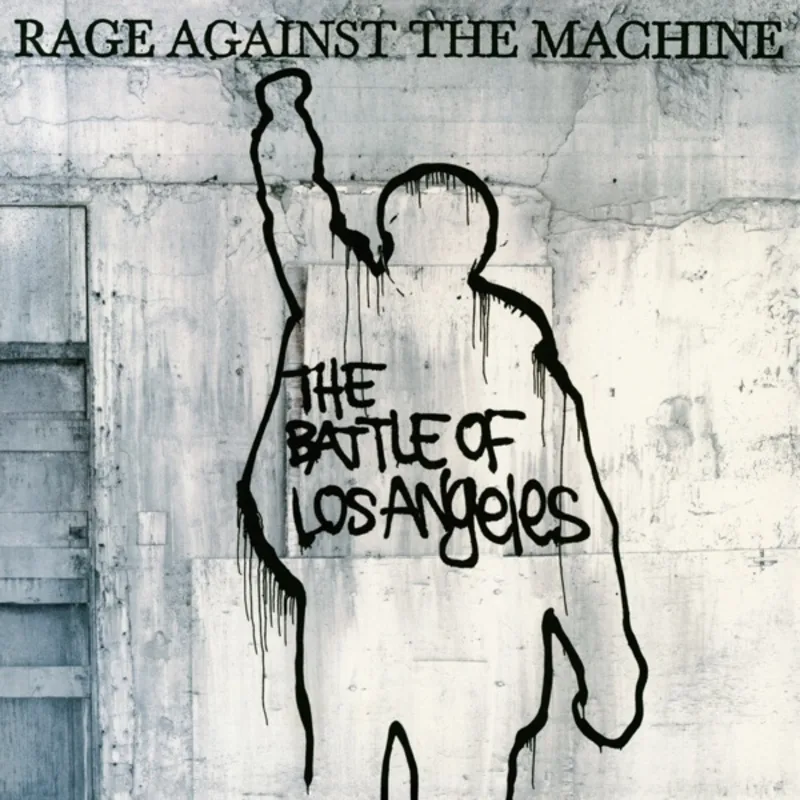
Joey Krebs knew exactly what Rage Against the Machine needed for their explosive third album. The Los Angeles graffiti artist, operating under the moniker "The Street Phantom," created an original spray-painted piece that would become one of the most recognizable political album covers in rock history.
The concept originated not from external events, but from the band's own revolutionary music and words. Despite widespread claims linking the artwork to the 1992 Los Angeles riots, both the band and Krebs maintained the image was inspired purely by Rage Against the Machine's radical message of resistance and uprising.
Krebs executed the cover using his signature graffiti technique—spray paint applied directly to create the stark silhouette of a human figure with raised fist. The dripping paint effects and raw urban aesthetic perfectly captured the band's street-level politics. The work represented one piece in a series that could be found on various murals throughout Los Angeles.
The artist's style typically featured outline profiles of human forms with overlaid text, a technique he had developed through years of gallery exhibitions across Los Angeles, New York City, and throughout the United States. Krebs went by multiple aliases including "The Phantom Street Artist" and his real name Joel Jaramillo, establishing himself as a respected figure in the LA street art scene.
The cover appeared on The Battle of Los Angeles, released by Epic Records on November 2, 1999, as the band's third studio album. Though no specific art director was publicly credited for the project, the collaboration between Rage and Krebs proved seamless, with the band fully embracing the underground graffiti aesthetic.
Upon release, the album sparked no major cover art controversies, though some critics noted the potential for misunderstanding graffiti as mere vandalism rather than legitimate artistic expression. This tension between street art and mainstream acceptance perfectly aligned with Rage's anti-establishment message.
Visually, the stark black silhouette against the white background creates maximum impact through minimalist composition. The raised fist—a universal symbol of resistance—dominates the design, while dripping spray paint effects add raw urban authenticity. The bold, stencil-style typography complements the guerrilla aesthetic.
The cover's color palette deliberately mimics the limitations of street art—black paint on white surfaces, creating high contrast that reads clearly from a distance. This monochromatic approach strips away any commercial polish, maintaining the rebellious underground feel Rage cultivated throughout their career.
The Battle of Los Angeles debuted at number one on the Billboard 200, selling 420,000 copies in its first week. Both Time and Rolling Stone magazines named it the best album of 1999, cementing its place in rock history and elevating Krebs' artwork to iconic status.
The cover's influence extended far beyond music, helping legitimize graffiti art in mainstream culture during the late 1990s. It demonstrated how street art could translate effectively to commercial album packaging while maintaining its radical political power and aesthetic integrity.
Decades later, the image remains instantly recognizable, its raised-fist silhouette serving as a symbol of musical rebellion. The collaboration between Rage Against the Machine and Joey Krebs proved that the most powerful political art often emerges from the streets, not corporate boardrooms.
The artwork's enduring impact lies in its perfect synthesis of medium and message—street art for a street-fighting band, spray-painted rebellion captured on vinyl forever.
Get notified when we publish new cover stories. Download the Behind the Covers app and turn on notifications — a new album art deep dive, every day.
Loved the story behind The Battle of Los Angeles? Hear the album or add it to your collection.
More Rock Covers

More from the 1990s


Want to explore more?
Never miss a new cover story
Get the Behind the Covers app and turn on notifications — we publish new album art deep dives every day.