 1 / 3
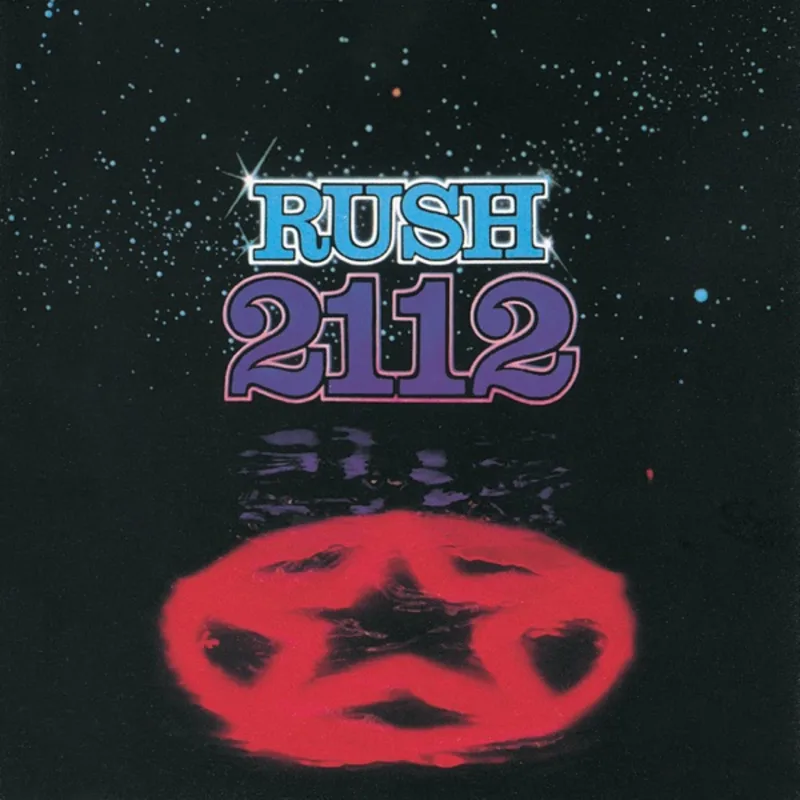
1 / 3Hugh Syme never imagined the naked figure he designed for Rush's 1976 album 2112 would become one of rock's most enduring logos. The Canadian graphic artist was tasked with visualizing drummer Neil Peart's dystopian story about individual creativity versus authoritarian control.
The concept emerged from conversations between Syme and Peart about the album's narrative arc. Peart described the Red Star of the Solar Federation as representing oppressive collectivism, while the man symbolized the story's hero - what Peart called "the abstract man against the masses." Syme simply combined these two elements into a single emblem.
Syme recruited his longtime friend Bobby King from the Niagara region to pose as the nude figure. For the purity of the character clashing with the Federation, Syme decided against jeans and a T-shirt. "Let's just make it as pure as a Greek sculpture, stripped down, let's get you naked," he told King. King agreed, though Syme later admitted he was never properly compensated for his modeling work.
The actual artwork creation involved traditional illustration and photography techniques in the pre-digital era. Syme designed the cover as what he calls a "marquee" - where the album title occupies most of the space. The front features a glowing red star against a galactic backdrop, with the band name and album title prominently displayed. Management loved this text-heavy approach.
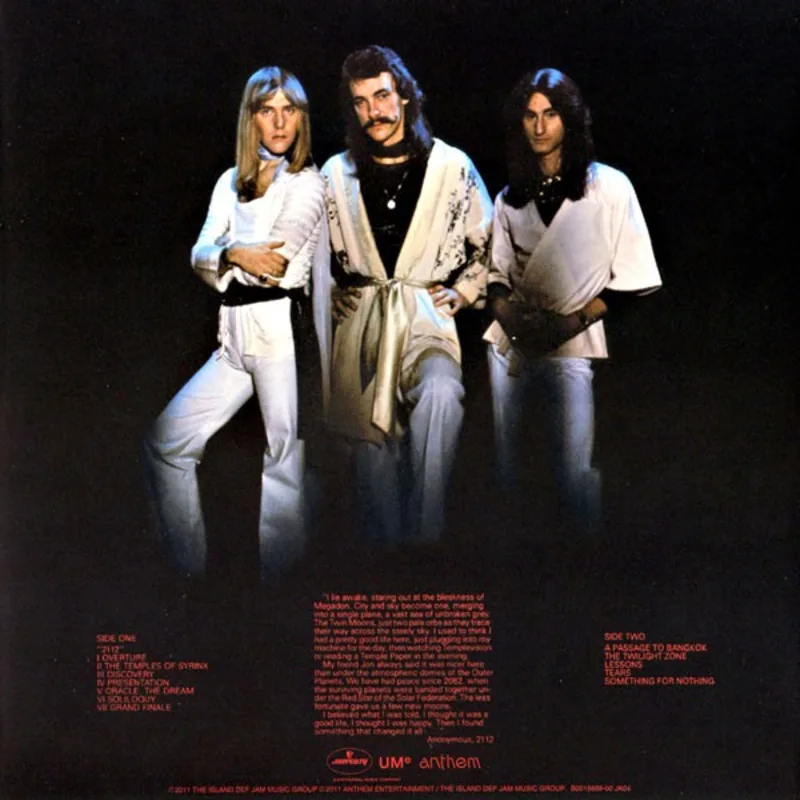
The iconic Starman image appears inside the gatefold, where King's nude figure stands defiantly against the looming red star. Syme considers this his first true collaboration with Peart, though he views the artwork itself as "pretty formative, pretty primitive." The gatefold also includes a photograph of the band dressed in white, standing in front of a wind machine - a shoot Alex Lifeson remembered as particularly awkward.
Hugh Syme is a Canadian Juno Award-winning graphic artist who became Rush's longtime art director starting with 1975's Caress of Steel. A trained musician himself, Syme studied at the Toronto New School of Art and York University in England. He also contributed keyboards to several Rush tracks, including "Tears" on 2112.
The album was released in March 1976 by Mercury Records during a crucial period for the band. Following disappointing sales of Caress of Steel, Mercury had considered dropping Rush but granted them one more album. Despite label pressure for more commercial material, the band proceeded with their progressive vision, creating what would become their first major commercial success.
Syme was genuinely surprised by the Starman's cultural impact. He first realized its significance at Rush's Massey Hall concerts in Toronto, where he encountered "this thing called merchandising" - seeing the logo everywhere on jackets, T-shirts, tattoos, and Neil Peart's drum heads. The symbol later appeared on multiple Rush covers and became essentially a band logo.
Visually, the cover employs bold, luminous colors that punch viewers with the same uncompromising energy as the music. The front emphasizes typography and cosmic imagery, while the interior gatefold reveals more elaborate visual storytelling. Syme's design successfully captured the album's themes of individual expression versus authoritarian control through stark symbolic imagery.
The Starman emblem has endured for over four decades, appearing on retrospective releases, live albums, and merchandise. In 2013, it was featured on a Canada Post stamp honoring Rush. The logo's staying power demonstrates how accidental iconography can sometimes become more significant than intended designs.
Bobby King became a recurring figure in Rush artwork, appearing not only as the Starman but also as the suited figure on Hemispheres and one of the movers on Moving Pictures. Syme jokingly noted he "made good use of his good will and his cheap modeling fees."
The 2112 artwork marked a turning point in both Rush's career and Syme's artistic relationship with the band. It established a collaborative approach between Syme and Peart that would define Rush's visual identity for decades. The cover's success enabled the band to maintain full creative control over future projects.
Despite Syme's modest assessment of the work, the 2112 cover remains a masterclass in translating complex musical and literary themes into striking visual form. The marriage of cosmic imagery, symbolic representation, and bold typography created an instantly recognizable aesthetic that perfectly complemented Rush's progressive rock ambitions.
Get notified when we publish new cover stories. Download the Behind the Covers app and turn on notifications — a new album art deep dive, every day.
Loved the story behind 2112? Hear the album or add it to your collection.
More Rock Covers

More from the 1970s


Want to explore more?
Never miss a new cover story
Get the Behind the Covers app and turn on notifications — we publish new album art deep dives every day.