Os Mutantes
Os Mutantes · 1968
- Designer
- Olivier Perroy
- Photographer
- Olivier Perroy
- Label
- Polydor
- Decade
- 1960s
- Genre
- Rock
A bug spray can sits among the band's instruments in a São Paulo recording studio in early 1968. Producer Manoel Barenbein watches curiously as Rita Lee places the Flit-brand aerosol among Os Mutantes' gear, preparing to substitute it for hi-hat cymbals on Le Premier Bonheur du Jour. This moment captures the playful experimentalism that would define both the band's music and their visual identity.
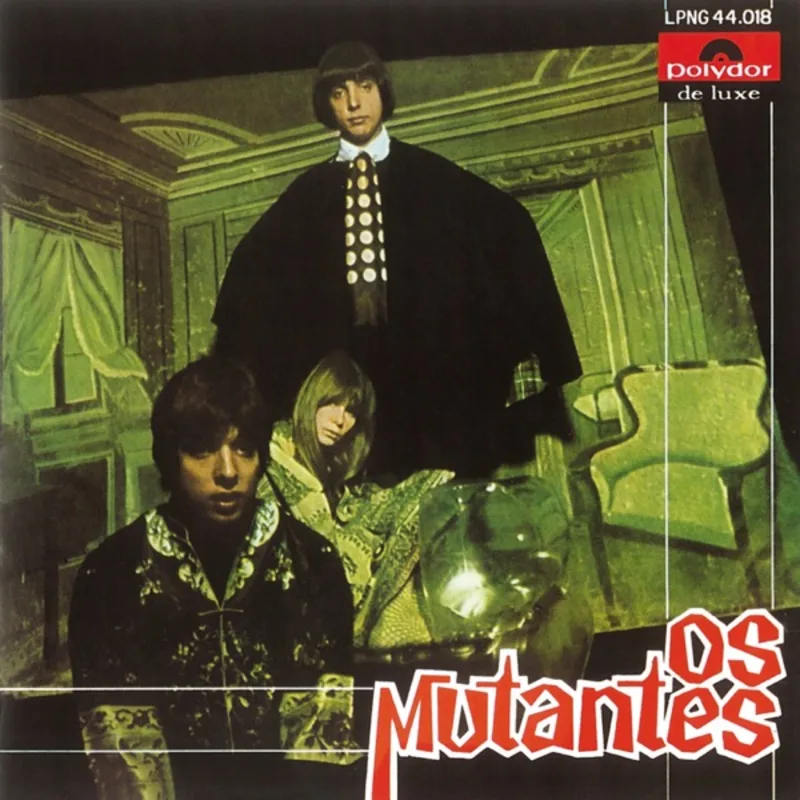
The cover concept for Os Mutantes' self-titled debut emerged from the collaborative spirit of the Tropicália movement. Olivier Perroy, a photographer working for the publishing giant Editora Abril, was enlisted alongside the band members themselves to create the album's visual identity. The design credits list both Os Mutantes as a group and Perroy individually, suggesting a truly collaborative approach to the artwork.
Perroy photographed the album cover in his own home in São Paulo. The setting was intimate and domestic, reflecting the underground nature of the Tropicália scene that was developing in the city. This wasn't a glossy commercial photo shoot but rather an extension of the artistic community that had formed around the movement, with artists working in each other's homes and personal spaces.
The resulting cover presents the three core members - Rita Lee, Arnaldo Baptista, and Sérgio Dias - in what could be seen as a knowing play on traditional Brazilian middle-class family portraits. The band members line up smartly for Perroy's camera, but their psychedelic clothing and instruments signal their rejection of conventional Brazilian musical traditions.
Olivier Perroy brought his experience from Editora Abril, one of Brazil's major publishing houses, to the project. His background in commercial photography provided a professional foundation for capturing the band's rebellious image. However, the intimate setting of his home studio allowed for the casual, almost snapshot-like quality that made the cover feel authentic rather than manufactured.
The band themselves contributed to the back cover design, creating a complete visual package that matched their musical philosophy. This collaborative approach between photographer and subjects reflected the communal spirit of Tropicália, where artists from different disciplines worked together to challenge Brazilian cultural norms.
The album's release in June 1968 came at a moment of intense political tension in Brazil. The military dictatorship was tightening censorship controls, and by December that year would implement the AI-5 bill imposing blanket censorship on politically subversive music. The simple, almost innocent appearance of the cover may have helped the album avoid immediate censorship scrutiny.
Critical reception of the album was polarized, with some reviewers noting the potential for controversy in the band's experimentalism. The cover's understated presentation contrasted sharply with the radical sounds contained within, creating a visual-audio disconnect that may have contributed to initial listener confusion.
The cover's composition employs a straightforward group portrait format, but the band's positioning and styling subvert traditional expectations. Their instruments are prominently featured, emphasizing their role as Brazil's first openly psychedelic rock band. The color palette and lighting create an intimate atmosphere that draws viewers into the band's world.
The typography choices remain simple and functional, allowing the photograph to dominate the visual space. This restraint in design reflects the album's focus on musical innovation rather than visual spectacle, though the band members' distinctive appearance provides plenty of visual interest.
Decades later, the album cover has become an iconic image of the Tropicália movement. When David Byrne's Luaka Bop label reissued the album in 1999, the original cover design was preserved, recognizing its importance to the band's visual identity. The cover helped establish Os Mutantes as visual pioneers alongside their musical innovations.
The influence of this understated approach can be seen in subsequent Brazilian rock albums, where intimate photography and collaborative design processes became more common. The cover demonstrated that revolutionary music didn't require revolutionary packaging - sometimes the most subversive act was appearing deceptively normal.
One fascinating detail that emerged years later: the domestic setting of Perroy's home photo shoot created an atmosphere so relaxed that some of the band's most spontaneous creative decisions happened during the session, including discussions about the experimental recording techniques they would later use on tracks like Le Premier Bonheur du Jour.
Get notified when we publish new cover stories. Download the Behind the Covers app and turn on notifications — a new album art deep dive, every day.
Loved the story behind Os Mutantes? Hear the album or add it to your collection.
More Rock Covers



More from the 1960s


Want to explore more?
Never miss a new cover story
Get the Behind the Covers app and turn on notifications — we publish new album art deep dives every day.