I Never Loved a Man the Way I Love You
Aretha Franklin · 1967
- Designer
- Loring Eutemey
- Photographer
- Jerry Schatzberg
- Label
- Atlantic Records
- Decade
- 1960s
- Genre
- Soul
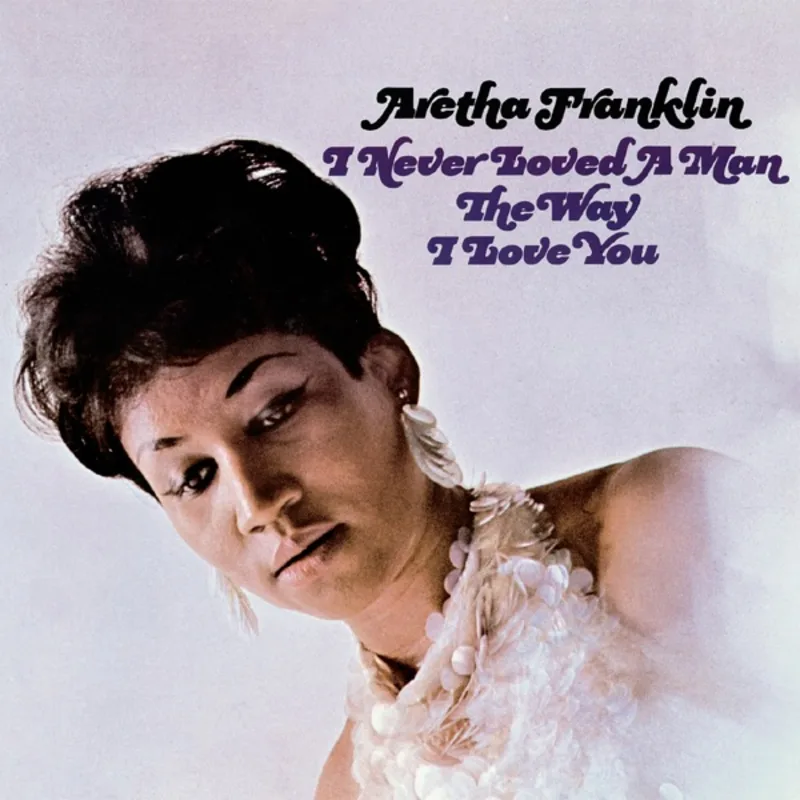
Jerry Schatzberg faced a freezing February morning in New York City when he photographed Aretha Franklin for what would become one of the most iconic soul album covers ever made. The date was February 16, 1967, just weeks before the album's March release, and the 25-year-old singer was finally free from Columbia Records' creative constraints.
The cover shoot came together through the vibrant artistic ecosystem of mid-1960s Manhattan. Jerry Schatzberg, already renowned for capturing Bob Dylan's Blonde on Blonde cover and The Rolling Stones' Between the Buttons, operated his legendary studio at 333 Park Avenue South—a cultural salon where fashion, music, and art intersected daily.
Schatzberg's approach to the session reflected his signature style of building human connections before ever lifting the camera. "It always works better when you know people," the photographer later reflected. "It makes them feel more at ease, and they'll surprise you with what they're going to do." The resulting portrait shows Franklin in an intimate, contemplative moment that perfectly matched the raw emotionality of her breakthrough Atlantic Records debut.
The album's visual identity was completed by Loring Eutemey, Atlantic Records' in-house design maestro. A Cooper Union graduate who began his career at Push Pin Studios, Eutemey had been crafting Atlantic's distinctive visual language since the late 1950s alongside Marvin Israel. His work for the label spanned hundreds of covers through the mid-1970s, establishing him as one of the most prolific album designers of the era.
Eutemey's typographic choices for the cover utilized West Behemoth's Italic Swash style, designed by Dave West for Photo-Lettering. This represented an early use of the dramatic, flowing typeface that would later be approximated as Stymie Black Italic in various type catalogs. The designer was known for his sophisticated typography selections, often drawing from Photo-Lettering's extensive catalog.
The album's March 10, 1967 release marked a seismic shift in popular music. After years of commercial disappointment at Columbia Records, where Franklin was forced into jazz standards that didn't suit her gospel-rooted voice, the Atlantic debut reached number 2 on the Billboard 200 and spent 14 weeks at number 1 on the R&B charts.
Schatzberg's photograph perfectly captured this moment of artistic liberation. The fashion photographer, who had already immortalized Dylan, Jimi Hendrix, and The Beatles, brought his characteristic street-style approach to Franklin's session. His images from that February day show the singer in various poses, with the selected cover shot emphasizing her quiet strength and determination.
Critical reception of the album—and by extension its visual presentation—evolved dramatically over time. Rolling Stone initially panned the record in 1967 for "the lack of versatility on the part of the sidemen," but by 2002 placed it at number 1 on their "Women in Rock: 50 Essential Albums" list. The 2020 revision of their "500 Greatest Albums of All Time" ranked it at number 13.
The cover's visual analysis reveals Schatzberg's mastery of black-and-white portraiture. The composition uses natural lighting to create depth and intimacy, while Franklin's direct gaze establishes an immediate connection with viewers. The photograph's monochromatic palette emphasizes texture and emotion over visual spectacle, reflecting the stripped-down soul sound within.
Eutemey's typography treatment complements Schatzberg's photography by avoiding visual competition. The elegant italic lettering flows across the cover without overwhelming Franklin's powerful presence, demonstrating the designer's understanding that sometimes the best design serves the subject rather than calling attention to itself.
The album's cultural impact extended far beyond its commercial success. It established the template for soul album covers of the late 1960s—intimate artist portraits that conveyed emotional authenticity rather than commercial polish. The cover influenced countless R&B and soul releases throughout the decade, particularly in Atlantic Records' catalog.
Decades later, Schatzberg's photograph continues to be referenced in discussions of the greatest album covers in popular music history. The image was inducted into various hall of fame lists and remains a touchstone for portrait photography in the music industry. Its influence can be seen in contemporary soul and R&B album artwork that prioritizes intimate artist portraiture.
The collaboration between Schatzberg and Eutemey created more than just an album cover—it crafted a visual declaration of independence that matched Franklin's musical liberation, forever linking the Queen of Soul's image to one of the most powerful photographs in music history.
Loved the story behind I Never Loved a Man the Way I Love You? Hear the album or add it to your collection.
More Soul Covers


More from the 1960s


Want to explore more?