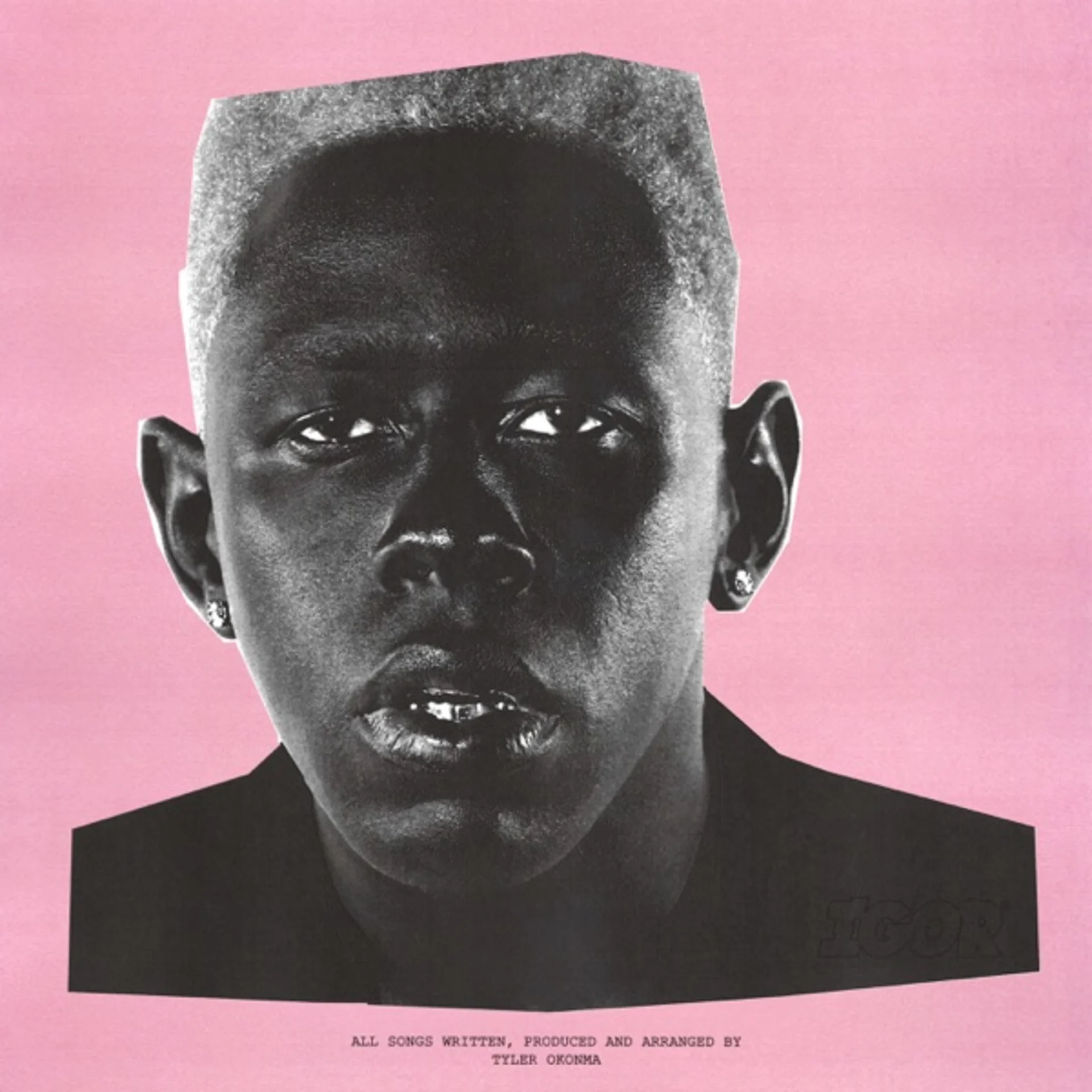
Tyler, the Creator art-directed the cover of IGOR himself, maintaining the total creative control over his visual presentation that has characterized his career since the earliest Odd Future releases. The image presents Tyler in character as Igor, a lovesick, jealous alter ego whose story the album tells across twelve tracks: he wears a blond bowl-cut wig, a tailored pink suit, and dark sunglasses, his face tilted slightly upward with an expression that combines vulnerability with a kind of defiant absurdity. The photograph was taken in a controlled studio environment that reduces the background to a flat, warm tone that keeps all attention on the figure.
The character design for Igor draws from multiple visual traditions simultaneously. The blond wig references both new wave musicians of the early 1980s and the cinematic tradition of the disguise that reveals more than it conceals. The pink suit cites the dandyism of Prince and Andre 3000 while adding Tyler's characteristic element of ironic exaggeration. The dark sunglasses hide the eyes, the traditional windows to the soul, creating a portrait of someone who wants to be seen in their costume while remaining invisible inside it.
The composition is straightforward portraiture: Tyler stands centered in the frame, shot from the chest up, his body angled slightly but his face directed at the camera. The simplicity of the framing is deliberate, placing all visual emphasis on the character's appearance and expression rather than on compositional complexity or environmental context. This portrait-style approach is appropriate for an album that is fundamentally about identity, about the masks we wear when we love and the selves we reveal when those masks crack.
The color palette is dominated by the warm, saturated pink of the suit, which occupies the largest area of color in the image and gives the cover its distinctive chromatic identity. The blond of the wig provides a warm accent that complements the pink, while the dark sunglasses add a note of opacity that prevents the palette from becoming uniformly bright. The background is a neutral warm tone, possibly a peach or tan, that does not compete with the suit but maintains the cover's overall warmth. The pinks and golds create a palette that is simultaneously romantic and artificial, beautiful and unsettling.
Tyler's expression beneath the wig and sunglasses communicates a specific emotional register: the slightly upturned chin and compressed lips suggest both pride and the effort required to maintain composure. The face is not quite smiling and not quite frowning, held in a state of emotional suspension that mirrors the album's exploration of love as a condition that exists between joy and devastation. The sunglasses deny the viewer access to Tyler's eyes, forcing us to read emotion through the less articulate language of mouth and jaw.
The typography for IGOR uses a bold, all-caps sans-serif font rendered in a color that integrates with the cover's warm palette. The album title is positioned prominently, its blockiness creating a graphic weight that anchors the portrait. The font choice is clean and contemporary, avoiding both the gothic elaboration of Tyler's earlier releases and the hand-drawn quality of much independent hip-hop design. This typographic maturity reflects the album's own artistic growth, its movement from the provocative shock tactics of Goblin to the emotional sophistication of a fully realized concept album.
The IGOR character extends across the album's entire visual ecosystem, from music videos to live performances to merchandise, creating a unified visual narrative that transforms the album from a collection of songs into a multimedia art project. The cover is the entry point to this world, and its combination of costume, color, and restrained composition establishes the terms of engagement: this is a character study, not a biography, and the disguise is the truth.
IGOR's cover crystallized Tyler, the Creator's evolution from provocateur to auteur, demonstrating that his visual intelligence was as developed as his musical talent. The image's influence on contemporary hip-hop aesthetics has been significant, encouraging artists to use costume, color, and character as tools for emotional expression rather than simply as markers of wealth or toughness. The cover proved that hip-hop could accommodate vulnerability, theatricality, and the full spectrum of human emotion, and that sometimes the most authentic self-portrait is the one wearing a wig.
Get notified when we publish new cover stories. Download the Behind the Covers app and turn on notifications — a new album art deep dive, every day.
Loved the story behind IGOR? Hear the album or add it to your collection.
More Hip-Hop Covers
More from the 2010s

Want to explore more?
Never miss a new cover story
Get the Behind the Covers app and turn on notifications — we publish new album art deep dives every day.