The Fat of the Land
The Prodigy · 1997
- Designer
- Alex Jenkins
- Label
- XL Recordings
- Decade
- 1990s
- Genre
- Electronic
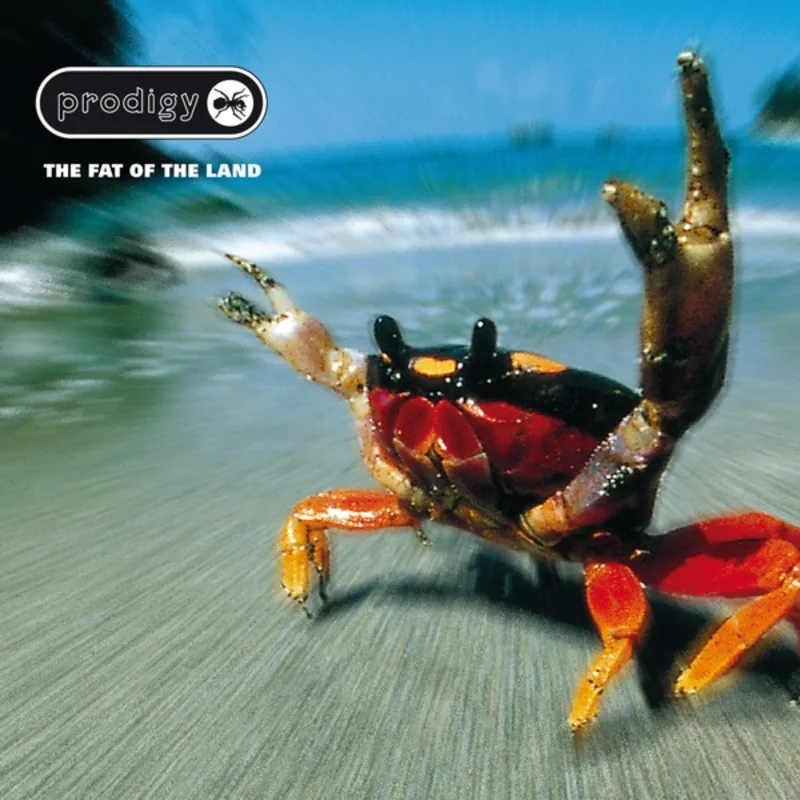
Record store chains across America initially refused to stock The Fat of the Land because they found the cover's giant crab imagery too disturbing for customers. The grotesque crustacean with its alien-like appearance and menacing claws seemed to crawl right off the shelf, making retail buyers uncomfortable despite the album's commercial potential.
Liam Howlett and the band wanted artwork that would mirror their harsh, industrial breakbeat sound. They approached Alex Jenkins, a designer known for his dark, surreal imagery, to create something that felt both organic and mechanized. The concept was to visualize the idea of feeding off the fat of the land — consuming and being consumed.
Jenkins constructed the crab design using a combination of photography and digital manipulation techniques that were cutting-edge for 1997. He photographed real crab shells and claws, then digitally enhanced and distorted them to create an almost cybernetic creature. The process involved multiple layers of texture mapping and color manipulation to achieve the metallic, bio-mechanical look.
The designer spent weeks perfecting the creature's unsettling proportions, making the claws disproportionately large and adding an oily, wet texture that made it appear freshly emerged from some toxic ocean. Jenkins wanted the crab to look simultaneously dead and alive, like a reanimated exoskeleton. The background's sickly yellow-green gradient added to the nauseous, polluted atmosphere.
XL Recordings initially supported the provocative design, understanding it would generate controversy and media attention. However, when major retail chains like Tower Records and Virgin Megastores expressed concerns about displaying the cover prominently, the label began to worry about commercial impact. Some stores demanded the album be placed in specialty sections rather than mainstream displays.
The band refused to compromise on Jenkins' vision, arguing that sanitizing the artwork would betray their artistic integrity. Liam Howlett publicly stated that any retailer uncomfortable with the cover clearly didn't understand The Prodigy's aesthetic. This standoff created significant press coverage, ultimately helping the album's marketing campaign.
Despite retail resistance, The Fat of the Land became one of the best-selling electronic albums of all time, moving over 10 million copies worldwide. The controversial crab cover became iconic within electronic music culture, spawning countless imitations and parodies. Jenkins' design proved that challenging artwork could coexist with commercial success.
The cover's influence extended beyond music into broader visual culture, inspiring video game designers, horror movie posters, and cyberpunk artwork. Many electronic artists began incorporating bio-mechanical imagery into their album covers, directly referencing Jenkins' groundbreaking design. The aesthetic helped define the visual language of late-90s electronic music.
Music video directors began adopting similar grotesque, organic-digital hybrid imagery in their work for electronic acts. The cover's success demonstrated that audiences were ready for more challenging, unsettling artwork in mainstream music. Jenkins' design became a template for how electronic music could visualize the intersection of nature and technology.
The album cover won several design awards and was featured in numerous "best album covers" lists throughout the late 90s and 2000s. Design schools began using it as an example of how provocative artwork could enhance rather than hinder commercial success. Jenkins' work proved that controversial design could be both artistically meaningful and commercially viable.
Interestingly, Jenkins revealed years later that the crab was partially inspired by his childhood fear of seafood restaurants with live lobster tanks. He wanted to create something that would make viewers as uncomfortable as he felt staring at those trapped crustaceans, turning the tables by making the crab the predator rather than the prey.
Loved the story behind The Fat of the Land? Hear the album or add it to your collection.
More Electronic Covers



More from the 1990s


Want to explore more?